
Opera, explored
This piece was written for music lovers who don't know what opera is, have never attended a live performance, and don't know if it's for them.

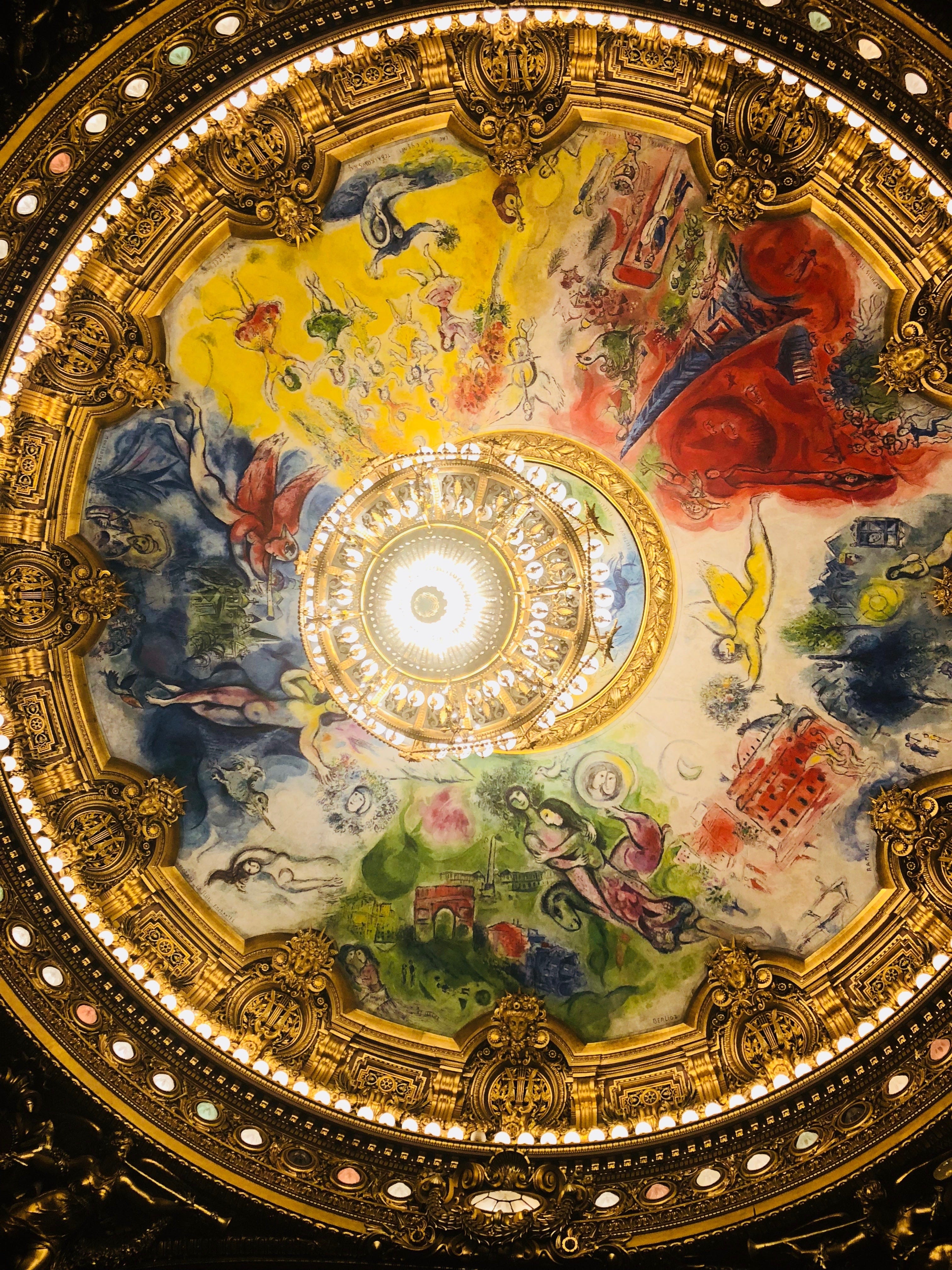
In 2011—my last year of high-school—I became obsessed with classical music. I used to listen to Vivaldi’s Four Seasons on my way to school every morning. Soon, Mozart, Beethoven, and Chopin, became regular companions. And thanks to the internet, I then stumbled upon Luciano Pavarotti’s rendition of “Nessun Dorma,” sung in a massive concert during his iconic Three Tenors tour. The larger-than-life music, and that distinctive, timeless voice really impressed me. I did not yet know I liked opera; but YouTube knew better.
Next, the all-knowing algorithm recommended a video of Maria Callas singing Carmen, the raunchy and fiery opera by French composer Georges Bizet, in Hamburg in 1962. Bizet’s music is known by just about everyone—with good reason. It is why Carmen is the third of the ABC operas, an acronym for the three most popular hits: Aida, Boheme and Carmen. If you’re sceptical, have a listen to “Habanera” and you’ll immediately recall having heard it at least a few times; in advertising if nowhere else.
One day, before my Art History class, I sat in the classroom editing an essay and I began listening to Callas’s “Habanera” recording. In a moment of disassociation, I totally forgot I wasn’t alone at home, and so I hadn’t noticed that someone had entered the room: it was Mr Morrison, the iconic and revered European and Art History teacher who taught at the high-school for over forty-years. He walked past my desk, paused, turned, and said “That’s Maria Callas,” recognising her voice immediately. He smirked and quipped, “Has anyone ever told you, sir, that you have taste?”
The next day, I walked into class to find a treasure trove of CDs on my desk—rare studio and live recordings of performances by Callas I’d never heard before. Discovering them was thrilling. Once Mr. Morrison understood I might have possibly caught the opera bug, he turned to me as I exited his Art History class and said “You do know you are only a few miles away from one of the best opera houses in the world. If you’re interested in opera, you must go. Being there… hearing it live—there is nothing like it.”
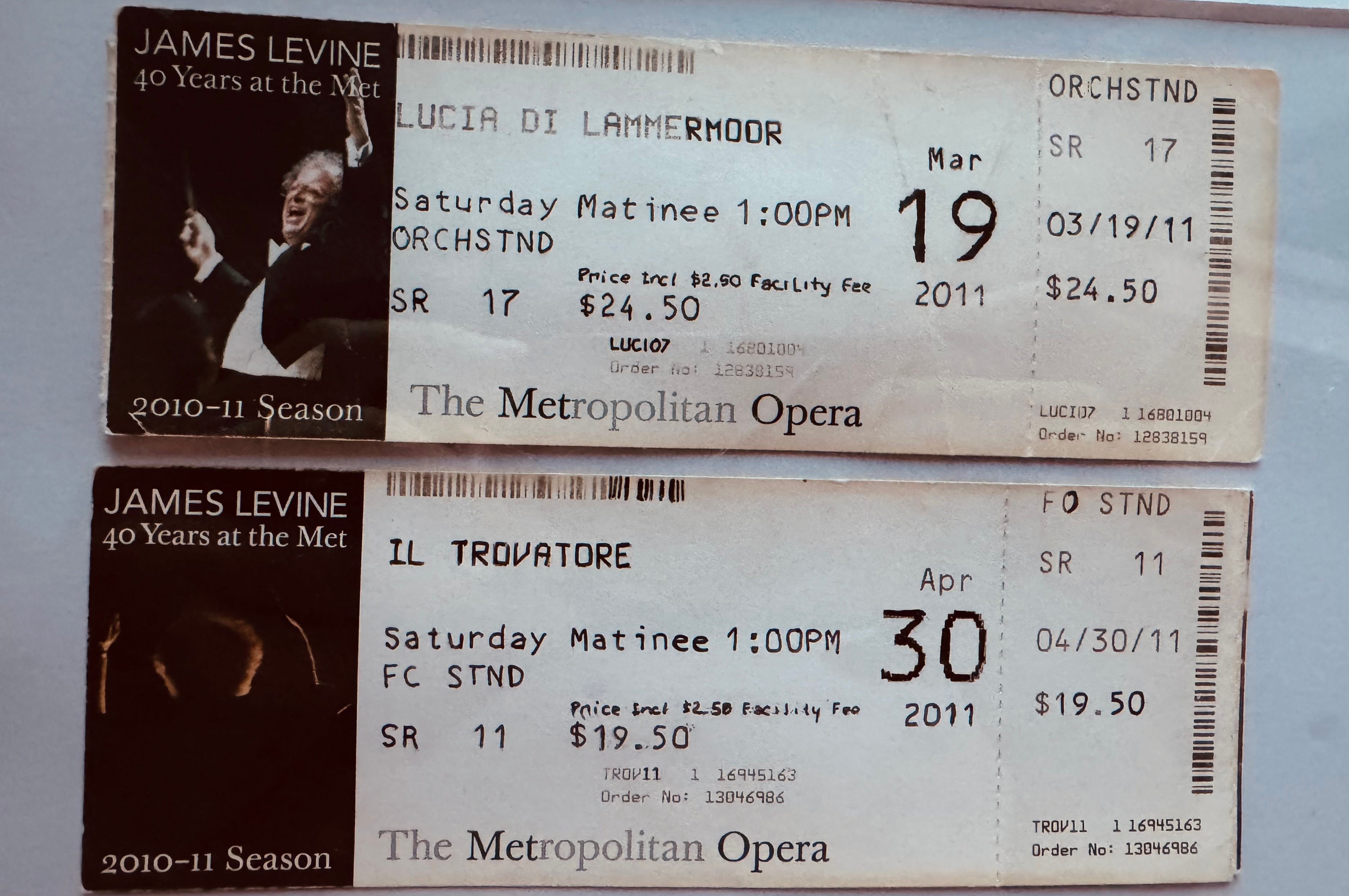
He mentored me on how to get some of the cheapest tickets in the house: Orchestra standing room. That’s right. You stand. But perched on a velvet arm rest. And so I rushed home and booked my first opera tickets, for a performance of Donizetti’s Lucia di Lammermoor, performed by French coloratura soprano Natalie Dessay (think Simone Biles of singing). That matinee performance was broadcast live on the radio and video recorded for the Metropolitan Opera’s on demand streaming service. So if you ever stumble upon Dessay’s live Lucia, you’ll hear me clapping in the audience!
At the end of the performance, Dessay was interviewed about singing such a hard role and broke the news that it would be her last ever performance of Lucia. So, I was incredibly lucky. Six weeks later, I went again to see Verdi’s Il Trovatore with yet another world-class cast.
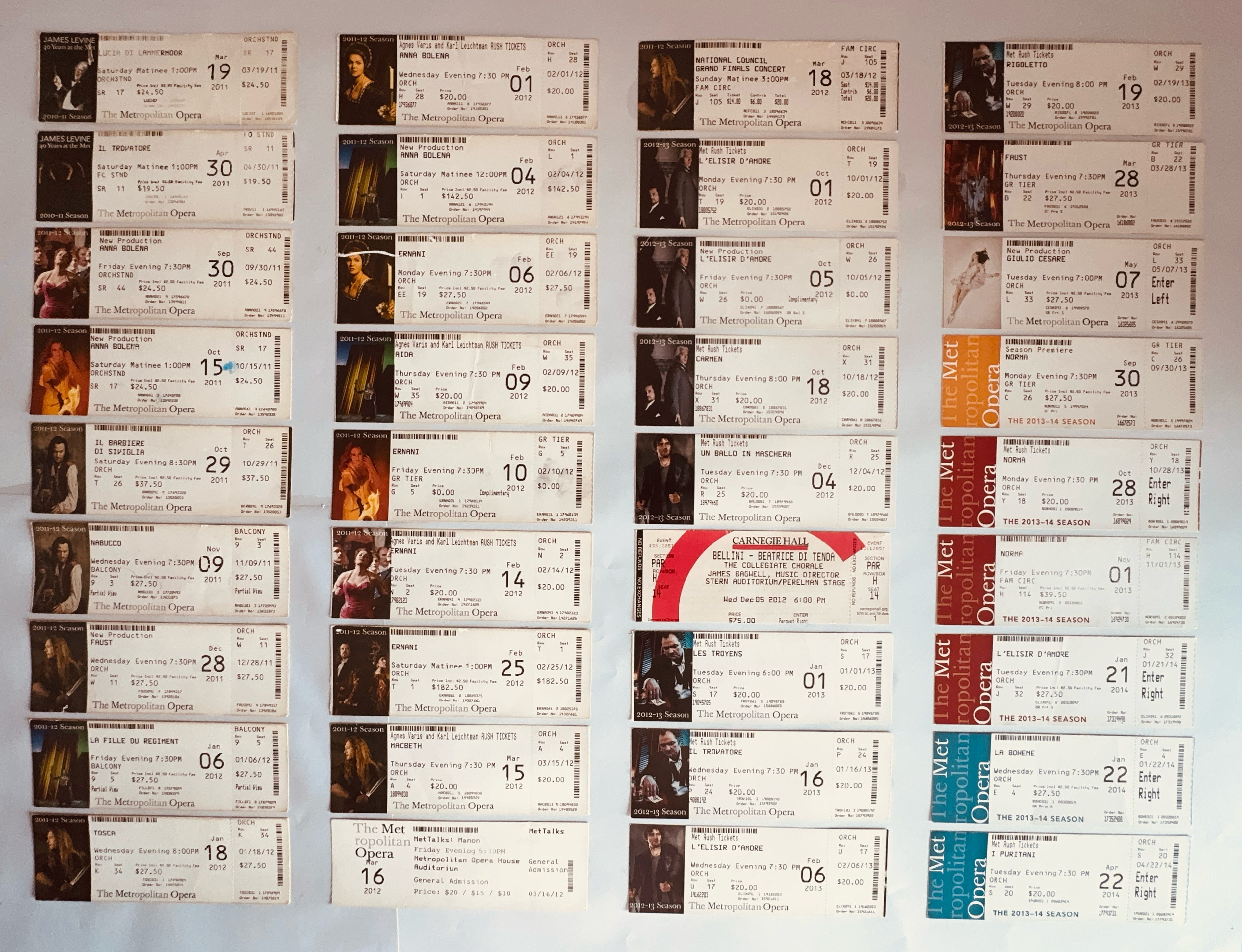
My love of opera took off, and I would go on to attend more than thirty performances at the Metropolitan Opera from 2011 to 2014—an average of once a month.
But what was it like, being there? I should start by explaining what opera is, and most importantly, what it is not.
For a first-timer, the most distinguishable characteristic of an opera performance is the fact that it is entirely sung—there is no spoken dialogue. Dialogues, which are still used to drive forward narrative and plot, happen either through recitative (a sort of musical declamation), duets, or in ensemble pieces. As a result, operas feel like a continuous, dynamic, and uninterrupted experience, in which music is given the most value. The drama and the emotion stems almost exclusively from the music. And so, as an audience member, you become truly immersed. You are transported. This is very different from a live musical theatre performance, where you are drawn into the plot via the acting, which is then interrupted by song and dance pieces (I am generalising here).
But there is yet another characteristic that makes opera opera: the singing, which is accompanied by a live orchestra, is not amplified. Singers are classically trained to sustain their tone and to use a blending of chest and head voice, creating a well-rounded and extremely powerful sound that can ring above a full orchestra. Mixed with the acoustics—which tend to be impeccable in opera houses—this allows the viewer and listener to experience the purity of the sound produced by extremely gifted and well-trained singers who breathe life into a composer’s piece. There is no loud, aggressive belting blared through speakers ringing in your ears.
If you're sceptical about the acoustics—or unsure whether you'll truly hear every note sung from the stage—let me reassure you. Composers often employ pianissimi, those exquisitely soft, almost whispered notes that hang in the air like breath. You’ll encounter them in the most dramatic moments of opera, especially during the so-called mad scenes, when a heroine, devastated by loss or betrayal, descends into anguish. These moments are not loud; they are intimate. And yet, they carry farther and strike deeper than any crescendo. I’ve heard them dozens of times, and I promise: you can hear a pin drop. The audience falls utterly silent—holding its breath, suspended in time. It’s not just audible, it’s unforgettable. Call it theatrical, even dramatic—but it’s the truth.
This year, I’ve been very fortunate to make a few friendships with people who are opera-curious and I’ve roped them into joining me for a couple of performances at the Royal Ballet and Opera and the English National Opera in London. I thought they deserved a well-thought-out exposition that might prime them to better understand opera as an art form. My hope is that this attempt at explaining opera will entice lovers of music to dip their toes into it.
If I could sum up opera as an experience, I would say this: when you are there, you are watching humans perform miracles right in front of your very eyes.
P.S.: Feel free to comment about your own experience. I will be publishing more opera content, including tips and tricks on how to book affordable tickets.
Very well-written and expressive... Glad that you caught the "opera bug", and can so clearly explain it to others! Thank you!
What an awesome teacher you had there!
https://placeandvibe.substack.com/p/an-evening-at-the-opera